


Like most digital infrastructure nowadays, Rogue Scholar and the underlying digital repository platform InvenioRDM are built and deployed using Docker containers. There are many ways to orchestrate (manage) Docker containers; two common options are Docker Compose for local development and Kubernetes for production infrastructure.
The problem is that for many small to medium-sized services – including Rogue Scholar – Docker Compose is too simple and Kubernetes is too complicated. Many alternatives cover that middle ground, in particular from the huge cloud providers (hyperscalers) such as AWS (Elastic Container Service or ECS), or smaller cloud providers such as Fly.io, where Rogue Scholar initially launched in 2023.
There are also multiple options to self-host Docker containers on your own infrastructure, rather than with a public cloud provider; you lose convenience but gain control over your data and save money. Last June, Rogue Scholar took that path, relaunching on our own servers (rented from Hetzner) and using the Kamal container orchestration tool.
Kamal has become popular since it was released in September 2023 and has worked really well for Rogue Scholar. But it falls short in helping with one important goal I have for Rogue Scholar and the underlying InvenioRDM repository platform: provide the best deployment alternative to Docker Compose and Kubernetes that makes it easy to get started with InvenioRDM in production.
One recurring theme in my work on scholarly infrastructure over the last 15 years has been KISS (keep it simple, stupid). Scholarly infrastructure is more often than not painful to use. Not only for scholars who want to create and consume scholarly content, but also for the people and organizations who want to help scholars work with scholarly content.
This is obviously a huge topic, and today I want to focus on one small aspect of it: it should be straightforward to configure and deploy a digital repository. For this I started the InvenioRDM Starter project in 2024.
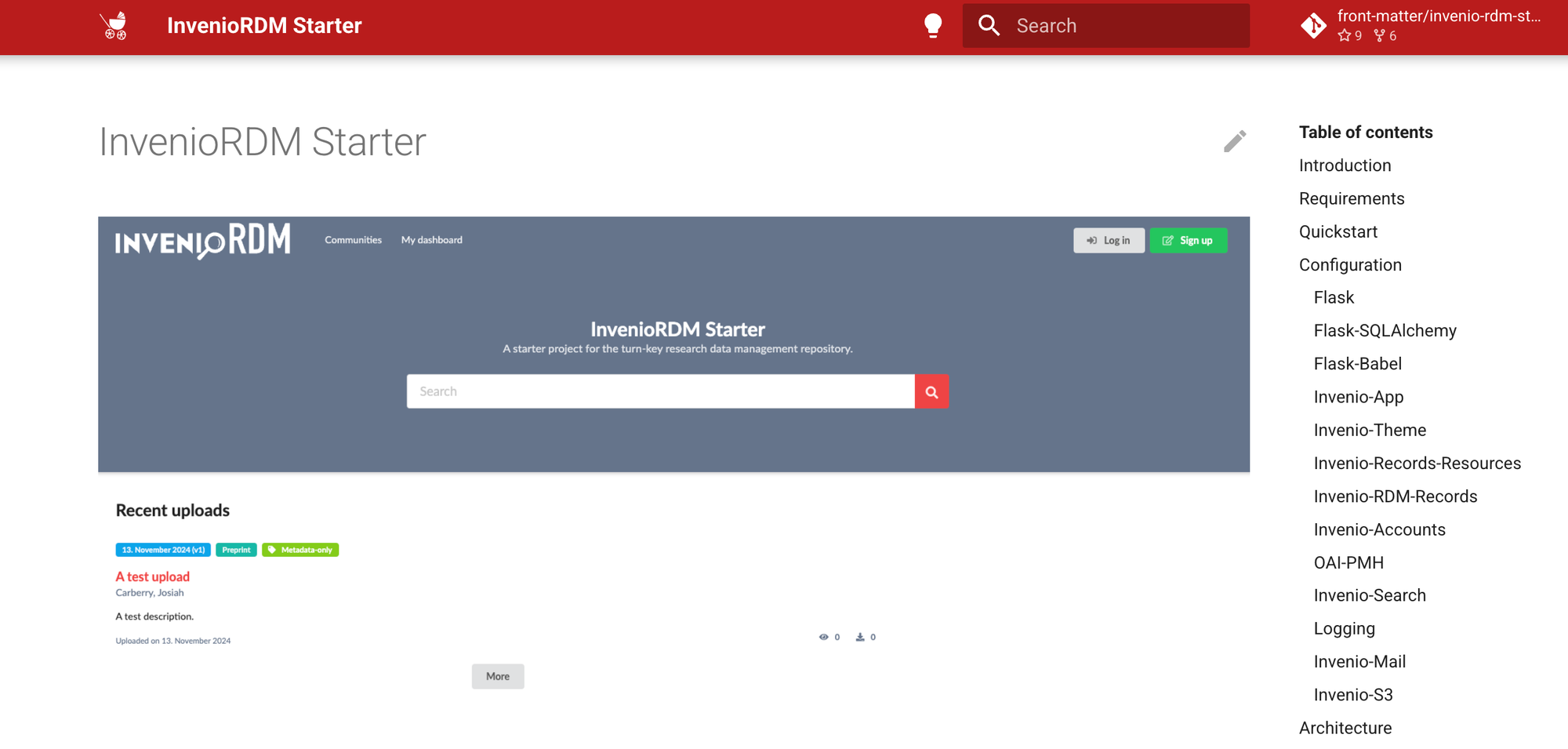
The initial focus was on the difficulties of building and configuring Docker images. InvenioRDM Starter provides pre-built Docker images and a Docker Compose configuration file that allows everyone to have InvenioRDM running on their local computer in less than 30 min.
Today, I am announcing the next big step for InvenioRDM Starter: make it straightforward to deploy InvenioRDM Starter to production within 60 min with the help of Coolify. Coolify is an open-source and self-hostable alternative to public cloud providers. It works seamlessly with Docker Compose, including the InvenioRDM Starter compose file, and you can use your own server(s) and/or dedicated servers you rented. Coolify is easier to use than Kamal as it provides a web interface instead of relying on YAML configuration files. And Coolify provides a growing list of services that can be installed with one click.
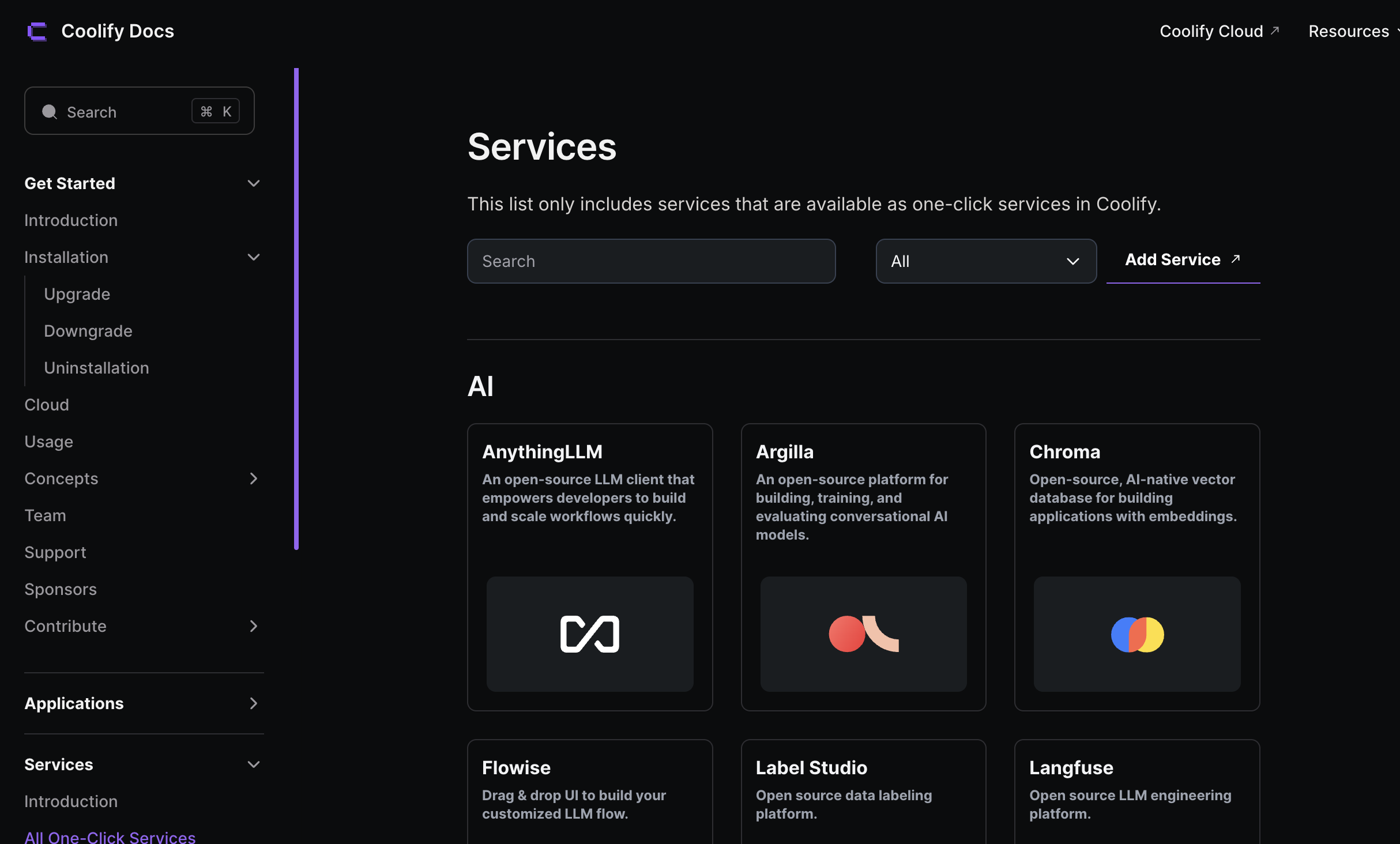
Currently this means additional services you need for your InvenioRDM instance, in the case of Rogue Scholar for example Keycloak identity and authentication management, Listmonk mailing list, Plausible web analytics, and n8n workflow automation – all open source software that can be self-hosted.
Going forward I want to write an InvenioRDM one-click service for Coolify so that installing InvenioRDM as production service becomes as straightforward and affordable as installing other popular open source software, e.g. the Ghost blogging platform that powers this blog.
Please reach out via Slack, email, Mastodon, or Bluesky if you have any questions or comments regarding Coolify or InvenioRDM Starter.
References
- Fenner, M. (2023, May 16). Does it compose? Front Matter. https://doi.org/10.53731/4nwxn-frt36
- Fenner, M. (2025, June 27). Kamal deploys InvenioRDM Starter to production. Front Matter. https://doi.org/10.53731/m7gng-jmm19
