


This week the InvenioRDM community meets in Graz for five days to discuss the open source repository platform. Front Matter has been part of the InvenioRDM community since August 2021, and Rogue Scholar relaunched on the InvenioRDM platform in October 2024.
On the first day of the workshop we will have a session where InvenioRDM instances can present the highlights of what they are doing, e.g. customizations of the InvenioRDM platform in their repository instance. Here are some of the special Rogue Scholar features launched since the last workshop March 2025 in Hamburg that I want to highlight:
Crossref DOI Registration
Rogue Scholar registered content with Crossref since it launched. In the last quarter of 2025 I worked on integrating the functionality directly into the InvenioRDM platform. This is a drop-in replacement for DataCite DOI registration, or Crossref and DataCite DOIs can be registered in the same instance. There is more need for discussion at the workshop around advanced features – e.g. multiple DOI prefixes by InvenioRDM community - but I hope we can finally merge the GitHub pull-request so that Crossref DOI registration is available for all InvenioRDM instances in the upcoming v14 release this summer.
InvenioRDM v14
Major releases of the InvenioRDM software happen once a year in the summer, and v14 is on track to be released in a few months. As in previous years, there will be a workshop session dedicated to release planing. Since a few weeks ago, Rogue Scholar is running the latest pre-release version of the software, and is showing the version number in its footer.
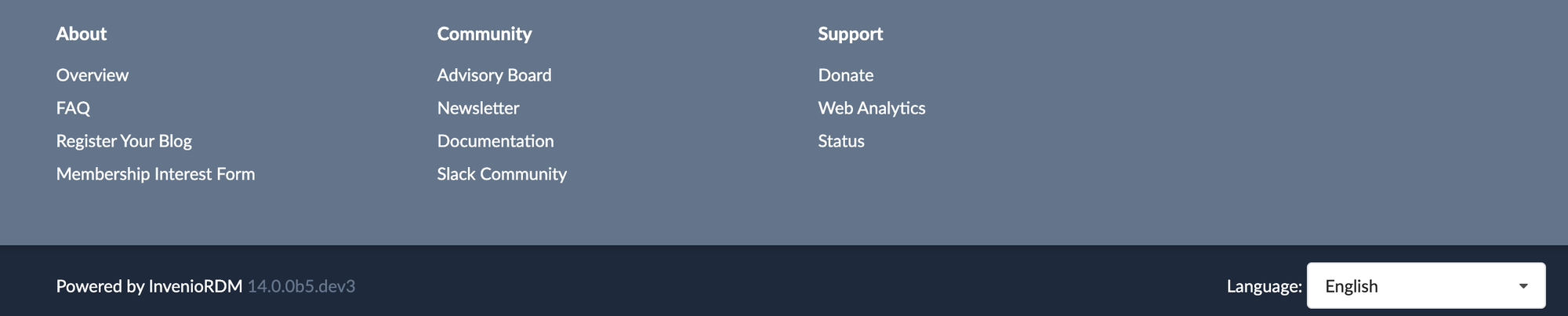
And as of last week, Rogue Scholar is powered by Python 3.14, which was released in October and since been added to all tests of Invenio packages.
More translations
Also in the footer is a menu to select the repository language. Rogue Scholar has content in currently 9 languages, plus two more translations (Czech and Swedish) for a total of currently 11 languages. The translations not only cover the user interface, but also dedicated text areas (such as the footer, FAQ and search guide), vocabularies and formatted citations.
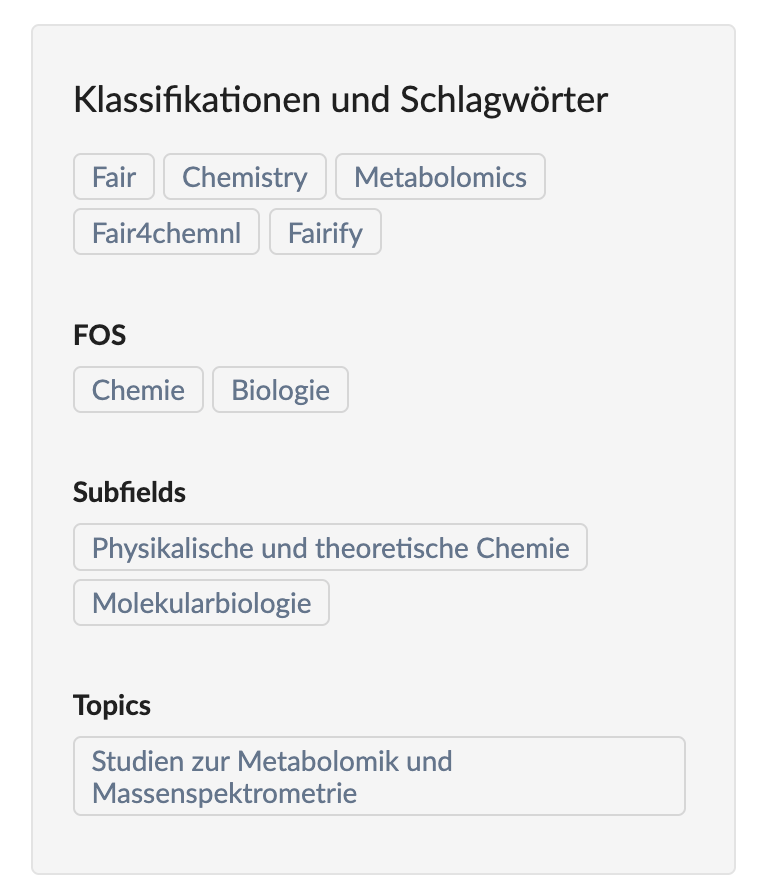
There are still gaps in the translations, which then fall back to English, but I hope to have them sorted out for the v14 release.
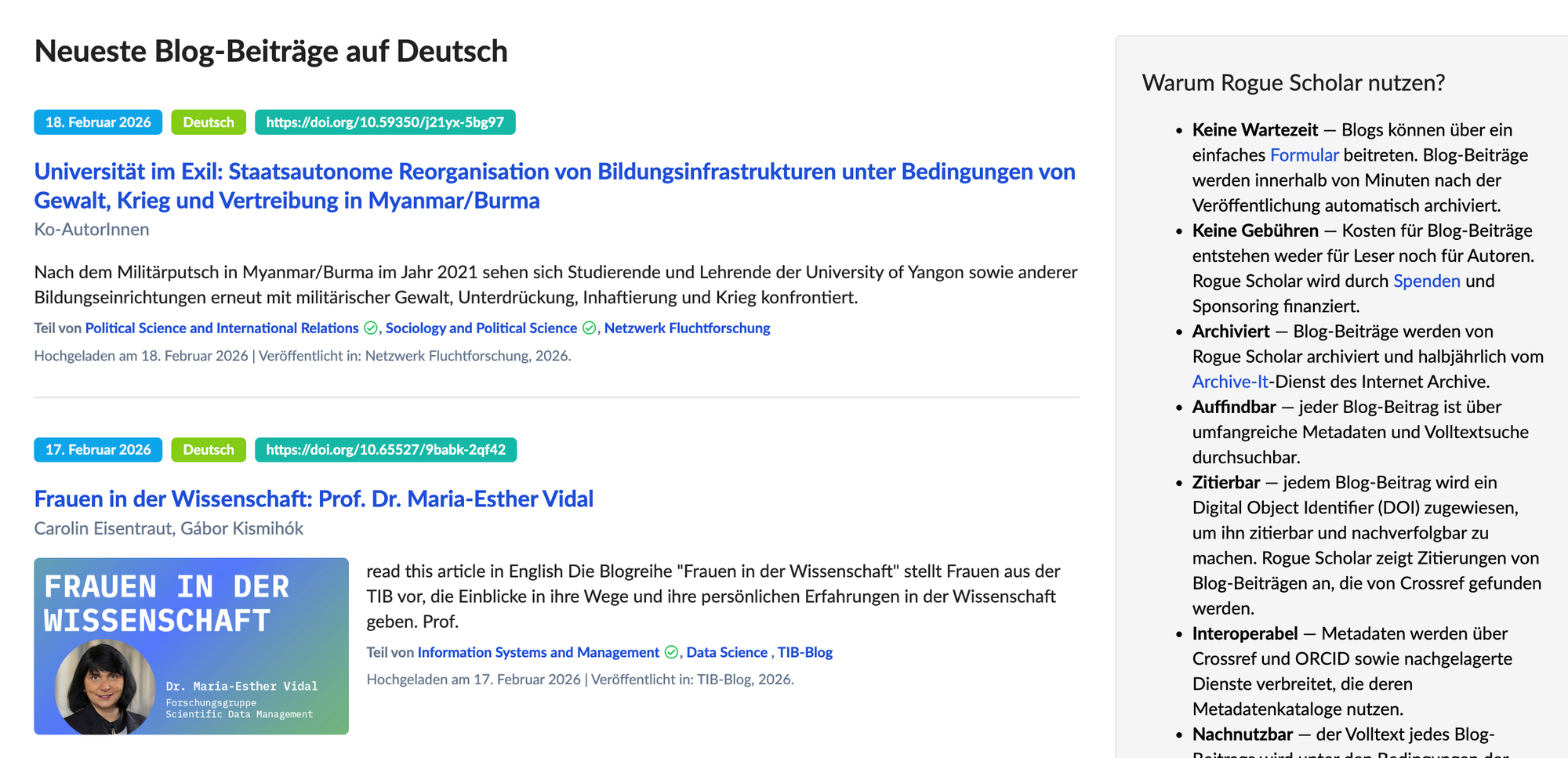
A new feature I launched in January is an update to the "Recently added content" section on the homepage – this section now only shows recently added content in the selected language:
OpenAlex subject classification
In the last quarter of 2025 I did extensive work on adding the OpenAlex subject classification to Rogue Scholar. The functionality is documented in detail elsewhere, so I focus on the main features here:
- Added subject vocabularies in yaml format for the hierarchical subject areas domains, fields, subfields and topics,
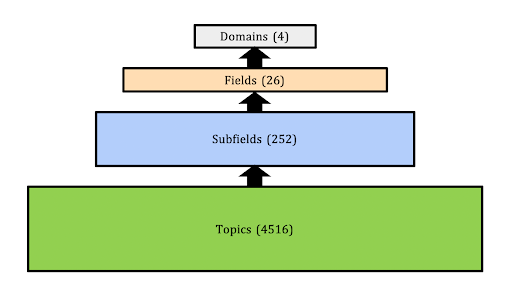
- Automatic classification of records using the title and abstract and a self-hosted machine learning model developed by OpenAlex,
- Translation of these vocabularies into 11 languages and integration into the InvenioRDM user interface,
- Automatic mapping of OpenAlex subfields to OECD Fields of Science (FOS),
- Clickable search filters for FOS, Subfields and Topics in the InvenioRDM user interface,
- Weekly newsletters for new content published in a particular subfield.
Dashboard with summary statistics
The dashboard showing key summary statistics launched last year is now integrated into the Rogue Scholar homepage. The dashboard uses existing OpenSearch queries to show live data, clicking on a number shows the underlying data. The dashboard doesn't use any external dependencies.
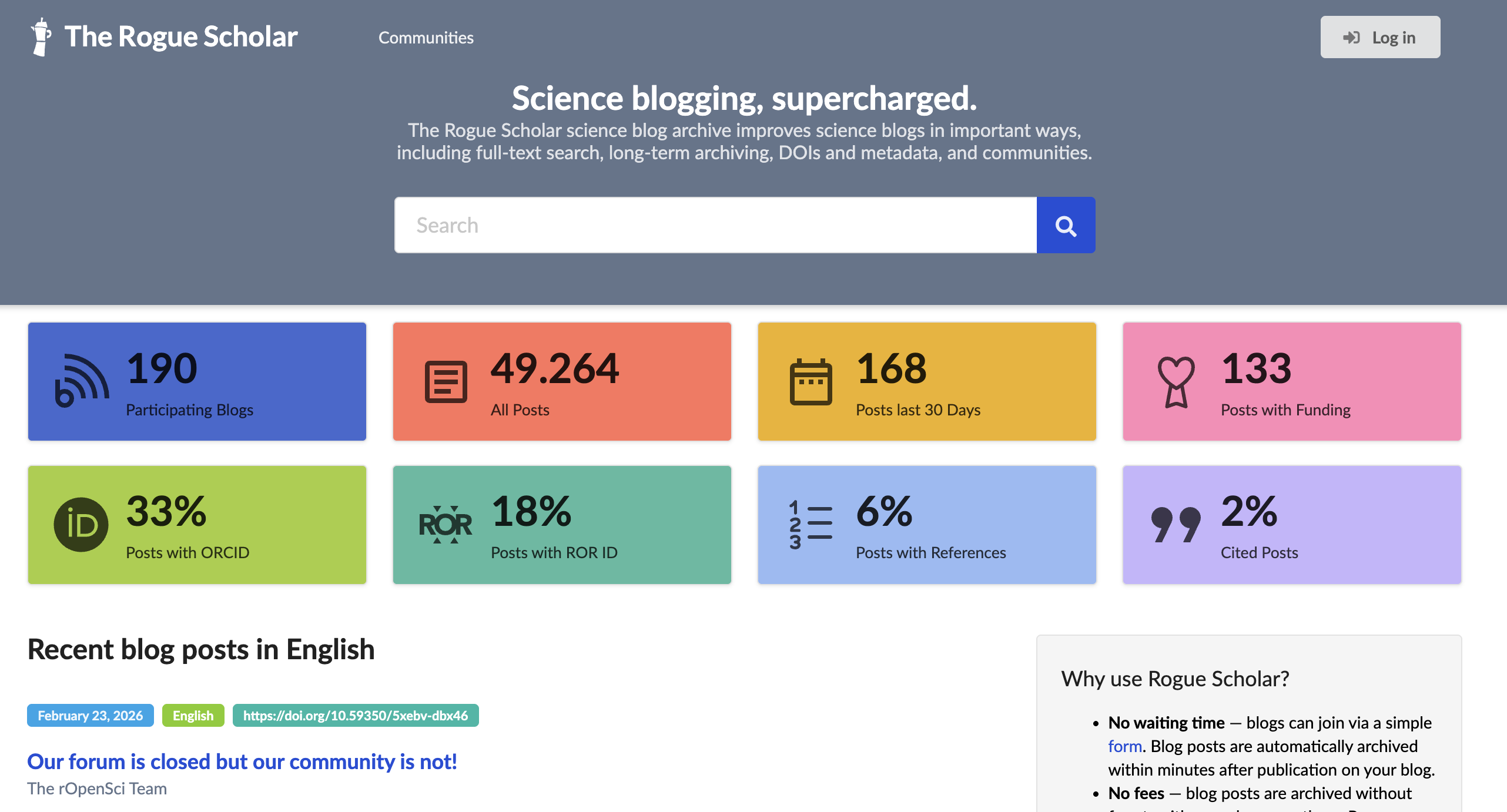
The only special number on the dashboard is cited posts, as this depends on the Crossref Cited-By service and a custom integration. And the dashboard is of course also translated into other languages.
Identity and Access Management with Keycloak
The InvenioRDM platform provides a lot of functionality for managing local user accounts, and for integrating with external services. Still, there are two challenges:
- some important functionalities are missing from the built-in functionality (e.g. two-factor-authentication), but adding them could bloat the built-in user accounts and makes them more difficult to maintain,
- InvenioRDM allows local user accounts and multiple external authentication services (e.g. ORCID, GitHub) in parallel, making it difficult to enforce policies (e.g. email validation).
My conclusion for Rogue Scholar was that I wanted to a migrate to a single Identity and Access Management (IAM) external service that should be open-source and self-hosted. After exploring several options I ended up deploying Keycloak as an IAM service. Commercial IAM services quickly become costly once your number of user accounts grows, and many open source IAM solutions either were too limited for the features I needed for Rogue Scholar, or felt too complicated to configure and deploy.
My self-hosted Keycloak instance uses a keycloak-invenio Docker image with several Keycloak extensions that add functionality I needed:
- the keycloak-orcid identify provider extension to integrate Keycloak with ORCID via Open ID Connect (OIDC),
- the auto-username extension that automatically generates random usernames such as usr_3k8d9ma2 (using the same Crockford base32 encoding as InvenioRDM records),
- the magic link authenticator extension that sends an a login link via email that automatically authenticates them when clicked.
- keycloakify for customizing login, account, email, and administration pages with React and Storybook.
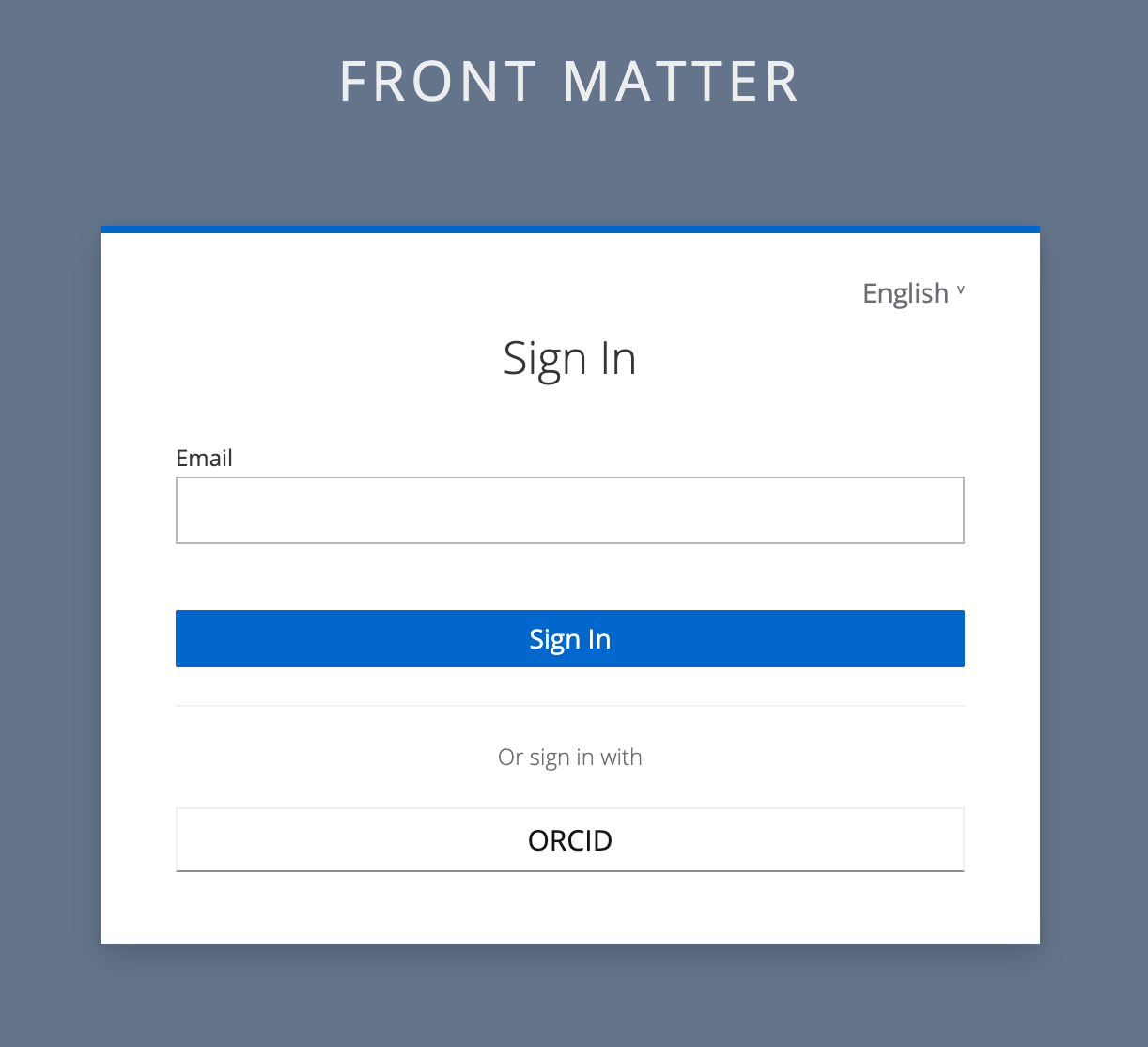
I can now enforce two policies with user accounts in Rogue Scholar:
- All user accounts must include an authenticated ORCID,
- Rogue Scholar doesn't store any passwords in InvenioRDM or the Keycloak realm that manages Rogue Scholar.
Over the coming months I will fine-tune Keycloak both in terms of functionality and user interface. One feature already developed but not needed for Rogue Scholar is enhancing the magic-link extension to allow account creation based on a whitelist of email domains.
Simplified deployment with Coolify Cloud
In 2025 Rogue Scholar changed how it hosts the InvenioRDM repository platform. All required services are hosted by a dedicated server from Hetzner and hosted in Germany, and S3 object storage also by Hetzner. The Docker images needed to run InvenioRDM are now orchestrated by Coolify, which provides an easy way deploy services based on Docker Compose configuration files to the cloud. In the next few months I will work on a one-click install option for InvenioRDM in Coolify, extending the work on InvenioRDM Starter I began in 2024. Before Coolify I used the Kamal tool to orchestrate InvenioRDM. While Kamal was working perfectly fine for my needs, I wanted a solution that is easier to deploy, and this is the case with Coolify.
Please use Slack, email, Mastodon, or Bluesky if you have any questions or comments, in particular with regards to InvenioRDM.
References
- Fenner, M. (2025, March 19). Rogue Scholar meets the InvenioRDM community. Front Matter. https://doi.org/10.53731/1aw0b-pr243
- Fenner, M. (2026, January 29). Rogue Scholar is improving subject classification (Version 3). Front Matter. https://doi.org/10.53731/76vm1-yme44
- Fenner, M. (2026, January 22). Rogue Scholar migrated to Coolify Cloud. Front Matter. https://doi.org/10.53731/dzznx-zkn71
- Fenner, M. (2025, June 27). Kamal deploys InvenioRDM Starter to production. Front Matter. https://doi.org/10.53731/m7gng-jmm19
